

Home / Cataracts / Cataract Surgery
Fort Worth (Alliance) & Colleyville
Cataract Surgery in Fort Worth, TX
Cataract surgery in Fort Worth at Azure Eye Center is performed by Dr. Truong, a fellowship-trained cornea and refractive surgeon, in a surgery suite inside our own practice that is accredited by The Joint Commission. For most patients that means no IV, no fasting, and no hospital facility fee, plus a lens implant chosen around how you want to see after surgery.

The short answer
What is cataract surgery?
Cataract surgery removes the cloudy natural lens inside your eye and replaces it with a clear artificial lens called an intraocular lens (IOL). At Azure Eye Center in Fort Worth, Dr. Truong uses phacoemulsification, a small-incision technique. The surgery itself usually takes about 10 to 15 minutes per eye, and you go home the same day.
A cataract does not go away with drops or glasses. Once it starts getting in the way of driving, reading, or work, surgery is the only treatment that clears it. The lens implant you choose also decides how much you will rely on glasses afterward, so that choice deserves real time at your consultation.
Timing
When is it time for cataract surgery?
It is time to talk about surgery when your cataract keeps you from doing things you need or want to do, and an updated glasses prescription no longer fixes it. There is no need to wait for a cataract to become "ripe."
Most people notice the change gradually. These are the signs patients in Fort Worth most often describe before they come in:
- ✓Night driving is harder. Headlights and streetlights cause glare, halos, or starbursts.
- ✓Vision looks cloudy or dull. Colors seem faded or yellowed, and you need more light to read.
- ✓Your prescription keeps changing. New glasses help for a while, then the blur returns.
- ✓Daily tasks take more effort. Reading menus, seeing a screen, or recognizing faces across a room gets harder.
For a full list of symptoms, types, and causes, read what a cataract is and how it affects your vision. You can also take our cataract self-test before you book an exam.
Step by step
How is cataract surgery done?
Dr. Truong removes the cloudy lens through a tiny incision and places a clear lens implant in the same spot. The two eyes are usually treated on separate days.
Exam and measurements
A dilated exam confirms the cataract, and detailed scans measure your eye so the lens power can be calculated. You choose your lens type here.
Surgery-day prep
You arrive at our suite, and the team dilates and numbs your eye with drops. For most patients there is no IV and no need to fast.
The 10–15 minute surgery
Through a small incision, phacoemulsification breaks up the cloudy lens with ultrasound and removes it. The folded IOL is then placed and unfolds in position.
Home the same day
You rest briefly, then a driver takes you home. You will use eye drops on a set schedule and come back for a check the next day.
LensAR laser-assisted cataract surgery
With the LensAR femtosecond laser, some steps that are otherwise done by hand, such as opening the lens capsule and softening the cataract, are done with a laser. It is an optional upgrade, and your exam determines whether it makes sense for your eye.
Learn about LensAR laser cataract surgery →One eye at a time
Each eye is treated on its own surgery day. Your second eye is scheduled after the first has started healing, on a timeline Dr. Truong sets with you. Doing them separately lets him check how the first eye is healing before treating the second.
Read more cataract surgery FAQs →Office-based surgery
Where is cataract surgery done at Azure Eye Center?
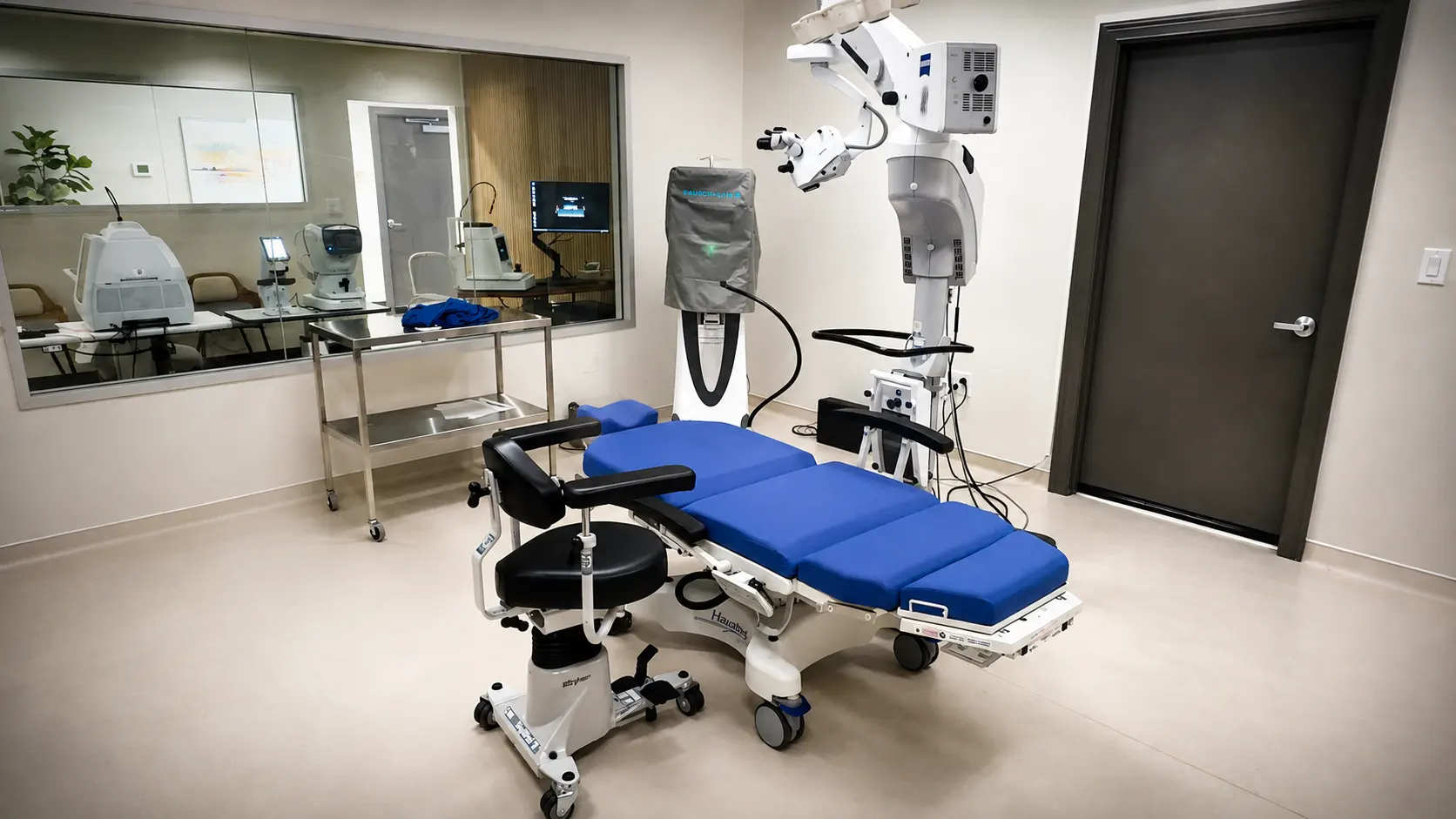
Your surgery takes place in the office-based surgery suite inside our practice, not in a hospital. The suite is accredited by The Joint Commission, the same independent organization that accredits many U.S. hospitals.
- ✓Typically no IV. Your eye is numbed with drops.
- ✓No fasting for most patients. Your pre-op instructions will confirm what applies to you.
- ✓No hospital or facility fee. You are not billed for a separate surgery center.
- ✓Close to home. The suite is part of our practice, so you are not sent to a separate hospital.
The suite is also used for refractive lens exchange, EVO ICL, and MIGS glaucoma procedures. See photos and details on our office-based surgery suite page.
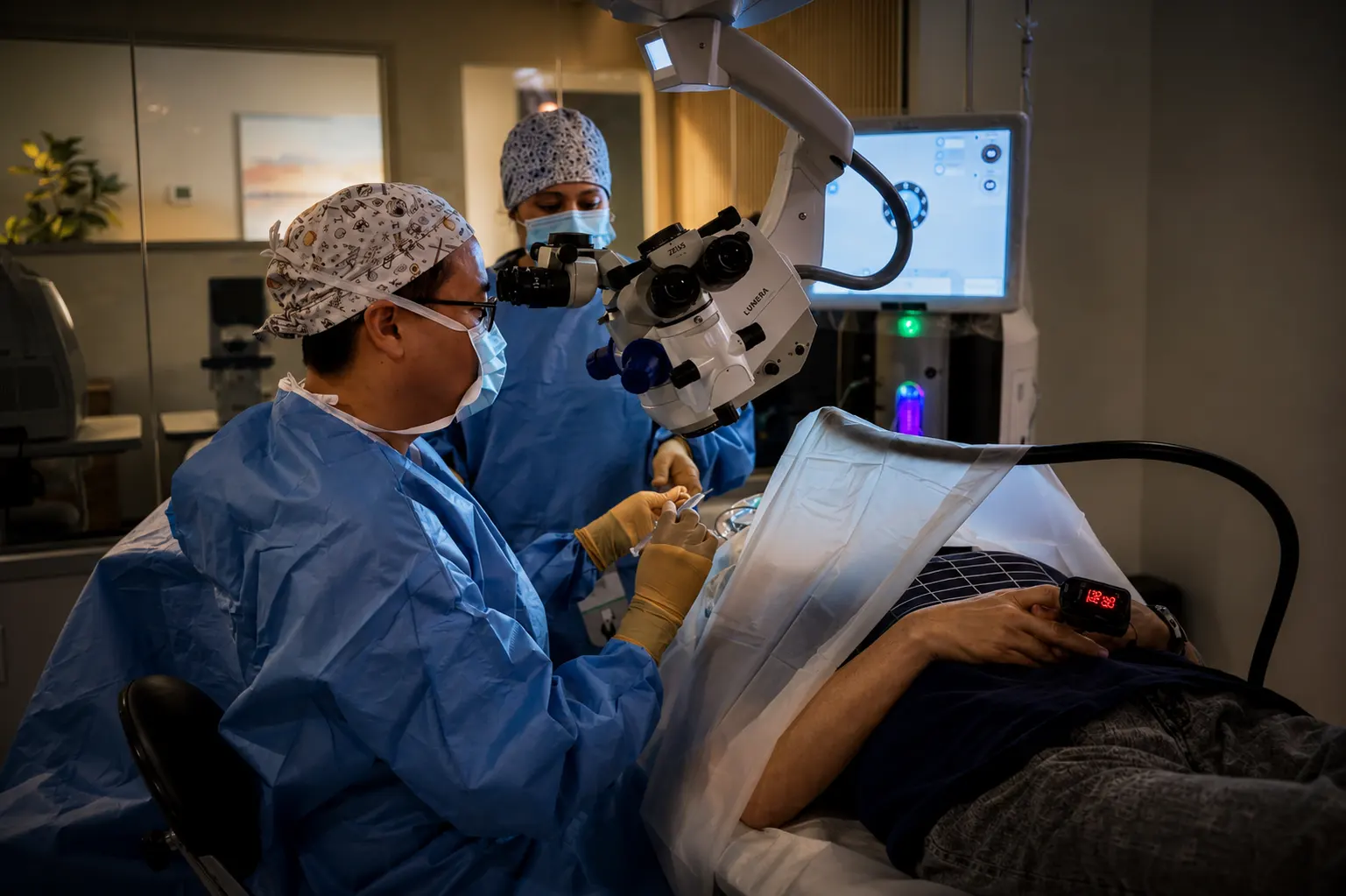
Watch
What to expect on surgery day
This short video walks you through a visit to our office-based surgery center, from check-in to going home.
Lens implants
Which lens implant is right for me?
The right lens depends on how you want to see after surgery and on the health of your eye. A standard monofocal lens gives clear vision at one distance; premium lenses add range so you may need glasses less often.
Every lens below is available at Azure Eye Center. Dr. Truong will tell you which ones fit your eye, including any that do not, and why.
| Lens type | Distance | Intermediate (computer, dashboard) | Near (reading) | Glasses likely needed | Often a fit for |
|---|---|---|---|---|---|
| Monofocal Clareon | Clear (when set for distance) | Limited | Limited | Reading glasses, often for computer too | People who are fine wearing readers and want the lens insurance covers |
| Monofocal-plus TECNIS Eyhance, Bausch + Lomb Aspire | Clear | Somewhat better than a standard monofocal | Limited | Reading glasses | People who want a bit more intermediate range with a low risk of glare |
| Extended depth of focus (EDOF) Vivity, TECNIS PureSee | Clear | Good | Functional for some tasks | Readers for small print or low light | Active people who want distance and computer vision with fewer night-vision side effects |
| Trifocal / full range PanOptix Pro, enVista Envy trifocal, TECNIS Odyssey | Clear | Good | Good | Least likely of these options | People who most want to reduce glasses use and accept some halos at night |
| Toric Toric IOL | Depends on base lens | Depends on base lens | Depends on base lens | Depends on base lens | People with astigmatism; toric versions exist for several lens types |
| Light Adjustable Lens Light Adjustable Lens | Fine-tuned after surgery | Can be adjusted toward your goals | Can be adjusted toward your goals | Depends on the final target you choose | Prior LASIK or PRK patients and people who want to test their vision before it is locked in |
This table is a general guide. Results vary by eye, and your exam determines which lenses you are a candidate for. Compare every option on our cataract lens options overview.
Your daily life matters most
Tell us what you do most: night driving, golf, screens, reading, crafts. That list does more to pick the right lens than any brochure.
Astigmatism can be treated
If you have astigmatism, a toric lens can correct much of it at the same time as your cataract surgery.
About toric lenses →Adjust after surgery
With the Light Adjustable Lens, your prescription is refined with light treatments after you heal, before it is locked in.
About the Light Adjustable Lens →Cost & insurance
How much does cataract surgery cost in Fort Worth, and does Medicare cover it?
Medicare and most insurance plans typically cover medically necessary cataract surgery with a standard monofocal lens. Your out-of-pocket cost depends on your plan's deductible and copay, plus any upgrades you choose.
Premium lenses (monofocal-plus, EDOF, trifocal, toric, and the Light Adjustable Lens) and LensAR laser assistance are optional upgrades that are paid out of pocket. Because the surgery is done in our accredited office-based suite, there is no separate hospital or facility fee.
We do not quote prices online because the total depends on your lens, your eye, and your coverage. You get an exact quote in writing at your consultation, before you decide anything. For a full breakdown, read our guide to cataract surgery cost and Medicare coverage in Fort Worth.
Payment options for premium lenses
Azure Eye Center accepts CareCredit, ALPHAEON Credit, and Cherry payment plans. Promotional plans may be available for qualified applicants.
See financing optionsRecovery
What is recovery like after cataract surgery?
Most patients notice brighter, clearer vision within the first few days, and healing continues over about a month. Everyone heals at a different pace, and Dr. Truong will give you instructions for your own eye.
The first day
Your vision may be blurry or hazy at first, and your eye may feel scratchy. You rest at home, start your eye drops, and come in the next day for a check.
The first week
Many people return to light daily activities within a day or two. You will wear an eye shield while sleeping, avoid rubbing your eye, and follow our guidance on swimming, heavy lifting, and bending.
The first month
Vision continues to settle, and your drops taper on a schedule. If you need glasses for some tasks, your final prescription is usually checked once the eye has stabilized.

Your surgeon
Why choose Dr. Truong for cataract surgery?
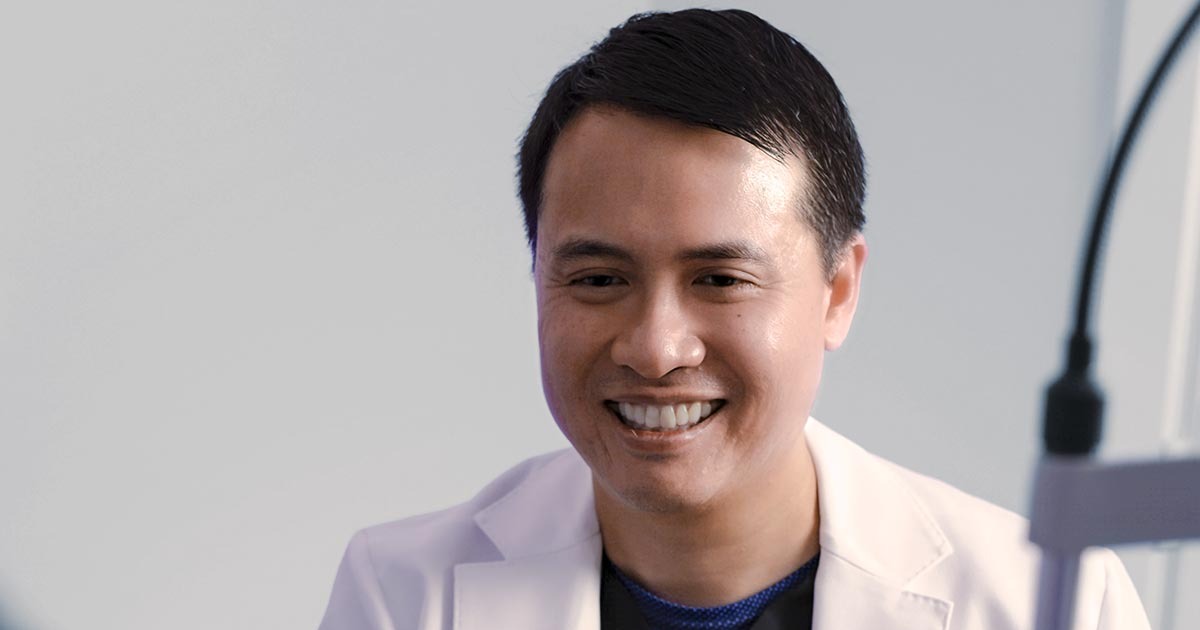
Dr. Truong is a board-certified ophthalmologist with fellowship training in cornea and refractive surgery. He performs all surgery at Azure Eye Center.
- ✓Fellowship-trained. Cornea & Refractive Surgery fellowship at the Jules Stein Eye Institute, UCLA.
- ✓Board-certified. American Board of Ophthalmology since 2018.
- ✓Teaching faculty. Adjunct Assistant Professor of Ophthalmology at UT Southwestern, where he completed his residency.
- ✓Full lens range. Premium lenses, the Light Adjustable Lens, and LensAR laser-assisted surgery.
His cornea training matters when your eye is not straightforward. Conditions like Fuchs dystrophy, keratoconus, or prior LASIK and PRK change how lens power is calculated and which lenses make sense. Dr. Truong also performs corneal procedures such as DMEK and DSEK transplants and cross-linking, so your cornea and your cataract can be planned together. Meet Dr. Truong.
"Answers all the questions honestly. Does not try to sell unnecessary procedures." — Azure Eye Center patient review
Two locations
Cataract surgery near you in Fort Worth and Colleyville
Consultations and follow-up visits are available at both offices, with Dr. Truong and optometrist Dr. Samantha Reynolds. Both offices are open Monday–Thursday 8:00 am–5:00 pm and Friday 8:00 am–3:00 pm.
(817) 886-4600
(817) 886-4600
Coming from Keller or Southlake? See eye surgery for Keller and Southlake patients.
For eye care providers
Referring a cataract patient?
Optometrists and other eye doctors can find referral information and contact our team through the Azure Eye Center doctor portal.
FAQ
Cataract surgery questions from Fort Worth patients
Is cataract surgery painful?
For most patients, no. Your eye is numbed with drops before surgery, and most people feel light pressure rather than pain. Afterward the eye may feel scratchy or irritated for a day or two, which usually responds to your prescribed drops. At Azure Eye Center in Fort Worth, the team walks you through what you will feel at each step so nothing is a surprise.
How long does cataract surgery take?
The surgery itself usually takes about 10 to 15 minutes per eye. Plan on spending longer at our office-based surgery suite overall, because check-in, numbing drops, dilation, and a short rest afterward add time. You go home the same day with a driver. Dr. Truong treats one eye per surgery day.
Will I need glasses after cataract surgery?
It depends on the lens you choose. With a standard monofocal lens, most people still need reading glasses and often glasses for computer work. EDOF and trifocal lenses can reduce how often you need glasses, and the Light Adjustable Lens can be fine-tuned after surgery. Your exam in Fort Worth determines which lenses fit your eye and what results are realistic.
Does Medicare cover cataract surgery?
Medicare and most insurance plans typically cover medically necessary cataract surgery with a standard monofocal lens, subject to your deductible and copay. Premium lenses and LensAR laser assistance are optional upgrades paid out of pocket. Azure Eye Center gives you an exact quote in writing at your consultation, and there is no separate hospital facility fee for surgery in our suite.
Can I have both eyes done on the same day?
At Azure Eye Center, cataract surgery is done one eye at a time. Your second eye is scheduled after the first has started healing, on a timeline Dr. Truong sets with you. This lets him check how your first eye is healing and how your vision is settling before he treats the second eye.
How soon can I drive after cataract surgery?
You cannot drive yourself home on surgery day, so arrange a driver. Many patients are cleared to drive within a few days, once their vision meets the legal standard and Dr. Truong confirms it at a follow-up visit. Some people need longer, especially before the second eye is treated. Wait until you are cleared and feel comfortable behind the wheel.
Can a cataract come back after surgery?
No. The cloudy lens is removed and cannot grow back. Some people later develop haze on the thin membrane that holds the lens implant, called posterior capsule opacification or a "secondary cataract." It can make vision blurry again, and it is usually treated with a quick in-office laser procedure. Let us know if your vision changes after surgery.
Where is cataract surgery done at Azure Eye Center?
Dr. Truong performs cataract surgery in the office-based surgery suite inside Azure Eye Center, which is accredited by The Joint Commission. For most patients there is no IV, no fasting, and no hospital facility fee. Consultations and follow-up visits are available at our Fort Worth (Alliance) and Colleyville offices.
Who is the best cataract surgeon in Fort Worth?
The best surgeon for you is one with the right training for your eye. Look for board certification, fellowship training, a full range of lens options, and a surgeon who explains their approach and answers your questions plainly. Dr. Truong is board-certified, fellowship-trained in cornea and refractive surgery at UCLA's Jules Stein Eye Institute, and offers premium lenses and laser-assisted surgery.
Related pages
Schedule a cataract consultation in Fort Worth or Colleyville
Your consultation includes a dilated exam, measurements, and a plain-language talk about your lens options with Dr. Truong. You leave with a written quote and time to decide.
This page is for general education and is not medical advice. Candidacy, lens options, risks, and results vary by patient and are determined at an in-person exam with your eye surgeon.