

If you’ve been told you have cataracts but your vision still feels “hazy” even on days when the lighting is good, there may be more than one factor affecting your sight. One common (and often underdiagnosed) contributor is Fuchs’ Endothelial Dystrophy—a corneal condition that can cause fluctuating blur, glare, and slow-to-clear morning vision. For many patients, Fuchs’ doesn’t become obvious until they start noticing cataract symptoms or begin planning cataract surgery.
At Azure Eye Center, we help patients throughout the Fort Worth area—including Alliance, Keller, Saginaw, North Richland Hills, Haslet, Watauga, Justin, Haltom City, and Lake Worth—understand whether their vision is being limited by cataracts, corneal disease, glaucoma, or a combination. When Fuchs’ is part of the picture, the key is not just “having cataract surgery,” but having the right surgical plan based on how healthy the cornea is today and what it may need in the future.
What Is Fuchs’ Endothelial Dystrophy?
Fuchs’ Endothelial Dystrophy (often called “Fuchs’ dystrophy”) is a condition that affects the innermost layer of the cornea, called the endothelium. These cells help keep the cornea clear by pumping fluid out of it. When endothelial cells decline over time, the cornea can hold extra fluid, leading to swelling and blurred vision—especially noticeable in the morning or after long periods of sleep.
Fuchs’ can be mild for years. Many patients do not realize they have it until an eye exam reveals early corneal changes or until they start noticing increased glare and inconsistent clarity.
Common Symptoms Patients Notice
Fuchs’ symptoms can overlap with cataract symptoms. That overlap is exactly why a thorough evaluation matters. Common complaints include:
- Blurred vision that fluctuates (often worse in the morning)
- Glare and halos, especially with headlights or bright overhead lights
- “Hazy” or “smudged” vision that doesn’t fully clear with glasses
- Slow visual recovery after being in humid environments or after sleep
- Light sensitivity
If you live in Alliance, Keller, Saginaw, North Richland Hills, Haslet, Watauga, Justin, Haltom City, or Lake Worth and you’ve noticed these patterns—particularly morning haze that improves later in the day—it is worth discussing Fuchs’ during your cataract evaluation.
How Fuchs’ Impacts Cataract Surgery Decisions
Cataract surgery is highly successful, but it does create stress on the cornea during the procedure. In eyes with a healthy endothelium, this is typically well tolerated. In eyes with more advanced Fuchs’, the cornea may be more vulnerable to post-operative swelling, slower clarity recovery, and in some cases, the need for additional cornea-directed treatment.
That does not mean cataract surgery is “off the table.” It means the plan must be individualized and sequenced correctly. In practical terms, the pre-op evaluation for cataracts should include an assessment of the cornea’s endothelial health so we can answer questions like:
- Is the cataract the main reason for blur, or is corneal swelling a major contributor?
- Is cataract surgery alone reasonable, or should we plan for staged treatment?
- Should lens selection be adjusted to prioritize contrast sensitivity and reduce glare risk?
For patients who are also managing glaucoma, the planning can be even more important, because the overall goal becomes a balance of clarity, comfort, and long-term eye health. (You can learn more about glaucoma evaluation and management here: Glaucoma care at Azure Eye Center.)
How Fuchs’ Is Diagnosed
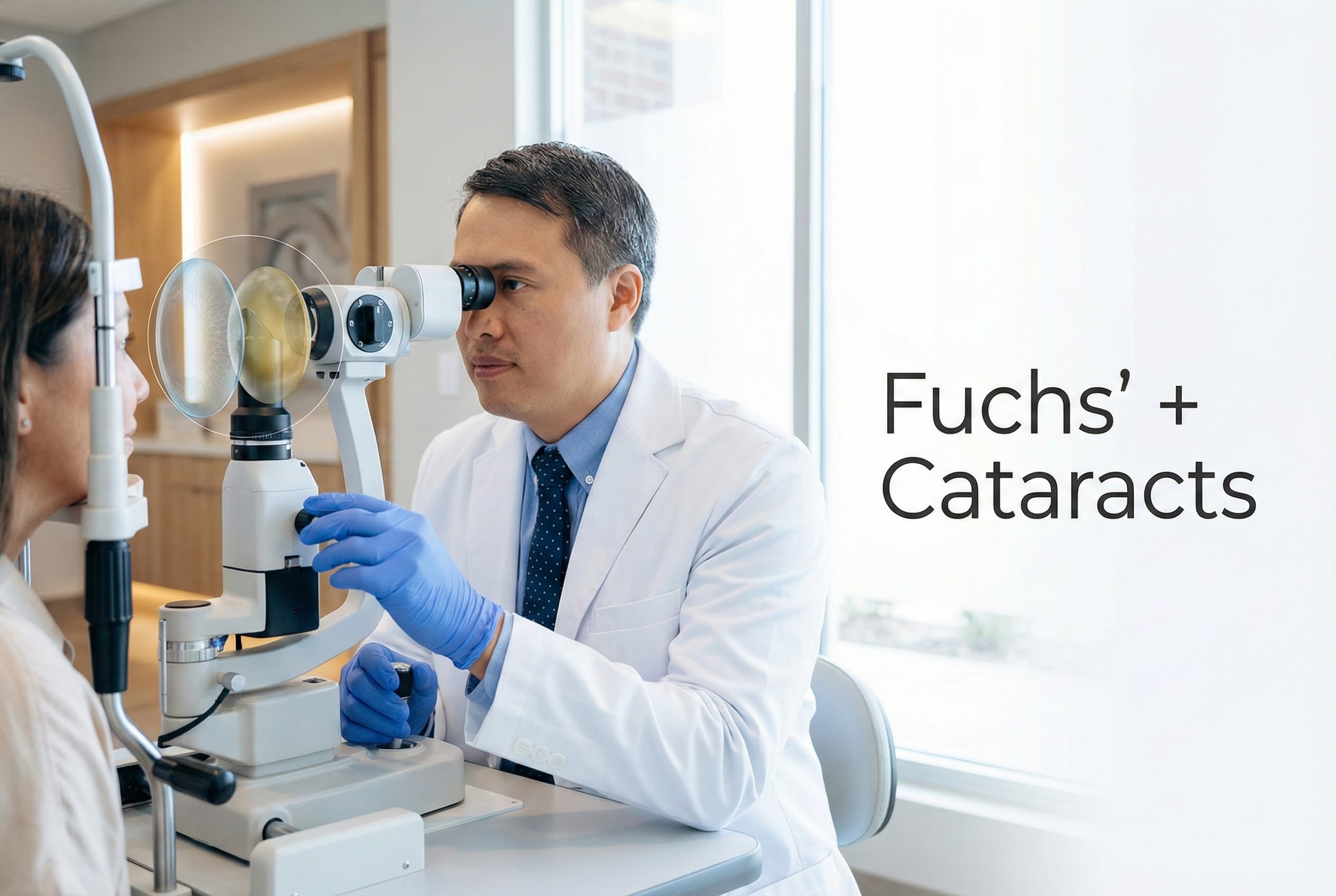
Diagnosis begins with a detailed slit-lamp exam, where your ophthalmologist looks for characteristic corneal findings. Your evaluation may also include additional testing to understand how much corneal swelling is present and whether the endothelium appears stable or under strain.
The most important point for patients is this: Fuchs’ exists on a spectrum. Many people have mild disease that can be monitored while they proceed with cataract planning. Others may need a more conservative approach, closer follow-up, or co-management with corneal subspecialty care depending on severity and risk profile.
Lens Selection and “Quality of Vision” Considerations
When patients plan cataract surgery, the conversation often turns to lens options and what kind of vision they want after surgery. With Fuchs’, we place extra emphasis on quality of vision—contrast, crispness, and minimizing glare—because the cornea itself can affect these outcomes.
In some cases, certain premium lens strategies may still be appropriate. In other cases, the best choice may be the lens option that delivers the most dependable clarity and contrast—especially for night driving—based on the cornea’s health. The right recommendation depends on your testing and your goals (driving, reading, screen time, and occupational demands).
If you’re exploring cataract surgery options, start here: Cataract information at Azure Eye Center.
What Treatment Looks Like for Fuchs’
Treatment depends on severity. Early disease may be managed conservatively with monitoring and symptom-based strategies. As the condition progresses, some patients develop persistent corneal swelling that can more significantly affect vision and comfort.
The key takeaway is that Fuchs’ is manageable—but it requires proper diagnosis and an appropriate plan. If advanced care is needed, your ophthalmologist can coordinate the right next step and guide you through what to expect, including timing relative to cataract surgery.
When to Schedule an Evaluation
Consider scheduling an exam if you have any of the following:
- Increasing glare/halos and night driving difficulty
- Vision that is worse in the morning and improves later
- Cataracts diagnosed elsewhere but results feel “uncertain”
- Glaucoma or eye pressure concerns alongside cataract symptoms
- Persistent “haze” that glasses do not fully correct
We regularly evaluate patients across Alliance, Keller, Saginaw, North Richland Hills, Haslet, Watauga, Justin, Haltom City, and Lake Worth who want a clear explanation of what’s driving their vision symptoms—and what a realistic, step-by-step treatment plan looks like.
Meet Your Surgeon and Start with the Right Plan
A careful evaluation is the foundation of a great outcome—especially when a corneal condition like Fuchs’ may influence cataract surgery timing, lens selection, and recovery expectations. To learn more about the physician leading your care, visit: Meet Dr. Truong.
Medical disclaimer: This article is for educational purposes only and does not replace a comprehensive eye exam or individualized medical advice. Diagnosis and treatment recommendations vary by patient.