

Cornea care · Keratoconus
Keratoconus Treatment in Fort Worth & Colleyville, TX
Keratoconus makes the cornea thin and bulge, blurring and distorting vision. Fellowship-trained cornea specialist Dr. David Truong diagnoses it early, stops it from progressing with corneal cross-linking, and helps you see clearly again, for patients across Fort Worth, Colleyville, Keller, and DFW.

The short answer
What is keratoconus?
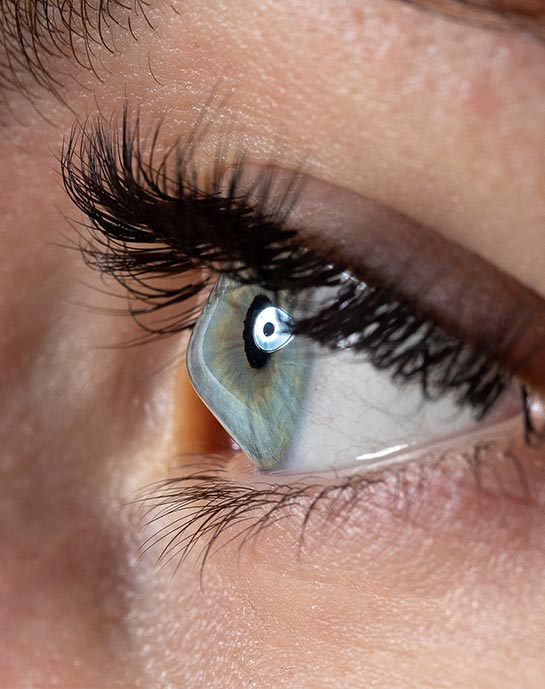
Keratoconus is a progressive eye condition in which the cornea thins and bulges outward into a cone shape. The irregular shape scatters light, causing blurry and distorted vision, glare, and frequent prescription changes. It usually begins in the teens or twenties and can be stabilized with corneal cross-linking.
Treatment has two goals: keeping the cornea from getting worse, and giving you the clearest vision possible with glasses, specialty contact lenses, or, in advanced cases, a corneal transplant.
Symptoms
What are the signs of keratoconus?
Keratoconus usually affects both eyes, often one more than the other, and symptoms tend to build gradually. Common signs include:
- ✓Blurred or distorted vision that glasses do not fully correct.
- ✓Sensitivity to light and glare.
- ✓Frequent changes in your eyeglass prescription, especially astigmatism.
- ✓Trouble seeing at night, with halos or streaks around lights.
- ✓Eye strain and headaches from working to see clearly.
If these symptoms are getting worse, schedule a cornea exam. Catching keratoconus while it is progressing is what makes cross-linking most valuable.
Causes
What causes keratoconus?
The exact cause is not fully understood, but several factors raise your risk:
Genetics
A family history of keratoconus increases your risk, so relatives may benefit from screening.
Chronic eye rubbing
Frequent, forceful rubbing, often from allergies, is linked to keratoconus and can make it worse.
Certain conditions
Keratoconus is more common with Down syndrome, Ehlers-Danlos syndrome, and allergic conditions such as asthma.
One simple step that helps: stop rubbing your eyes, and treat eye allergies so the urge to rub goes away.
Diagnosis
How is keratoconus diagnosed?
A cornea exam with advanced imaging confirms keratoconus and shows whether it is progressing.
Corneal topography
Maps the curvature of the cornea to detect cone-shaped steepening and irregularity.
Pachymetry
Measures corneal thickness, which matters for cross-linking and other treatments.
Slit-lamp exam
A detailed microscope exam of the cornea checks for thinning, lines, or scarring.
Tracking over time
Repeat mapping shows whether your keratoconus is progressing and when to treat.
Treatment
How is keratoconus treated?
Most patients use a combination of treatments. One stabilizes the cornea; the others help you see.
| Treatment | Best suited for | What it does |
|---|---|---|
| Glasses or soft contacts | Early keratoconus | Correct mild nearsightedness and astigmatism |
| Rigid gas permeable (RGP) lenses | Mild to moderate keratoconus | Create a smooth optical surface for clearer vision |
| Scleral lenses | Moderate to advanced keratoconus | Vault over the cornea for comfort and sharper vision |
| Corneal cross-linking | Progressive keratoconus | Strengthens the cornea to halt progression |
| Corneal transplant | Severe thinning or scarring | Replaces damaged corneal tissue |
Stop progression
Act early: cross-linking works best before vision is badly affected
Corneal cross-linking uses riboflavin drops and UV-A light to strengthen the cornea so keratoconus stops getting worse. It cannot undo existing changes, which is why treating progressive keratoconus early protects the vision you have.
Learn about corneal cross-linkingYour specialist
Why choose Dr. Truong for keratoconus care?
Dr. David Truong is a board-certified ophthalmologist with fellowship training in cornea and refractive surgery from UCLA’s Jules Stein Eye Institute. He manages keratoconus at every stage, from first diagnosis and monitoring to cross-linking and transplant surgery.
- ✓One cornea specialist for diagnosis, cross-linking, and surgery.
- ✓Advanced corneal imaging to catch progression early.
- ✓Coordinated vision care with glasses and specialty contact lens options.
- ✓Two offices in Fort Worth (Alliance) and Colleyville.

Two locations
Keratoconus care near you in Fort Worth and Colleyville
Consultations and follow-up visits are available at both offices, with Dr. Truong and optometrist Dr. Samantha Reynolds. Both offices are open Monday–Thursday 8:00 am–5:00 pm and Friday 8:00 am–3:00 pm.
(817) 886-4600
(817) 886-4600
Coming from Keller or Southlake? See eye surgery for Keller and Southlake patients.
FAQ
Keratoconus FAQs
Can keratoconus be cured?
There is no treatment that reverses keratoconus, but it can be controlled. Corneal cross-linking can stop it from progressing, glasses and specialty contact lenses restore clearer vision, and a corneal transplant is available for severe cases.
Does keratoconus get worse over time?
It often does, especially in the teens and twenties, and it typically slows by middle age. The rate varies from person to person, so regular corneal mapping is the only way to know whether yours is progressing.
Can I get LASIK if I have keratoconus?
Generally, no. LASIK removes corneal tissue and can make keratoconus worse, which is why corneal mapping is a standard part of every LASIK evaluation. Dr. Truong can discuss vision options that are safe for your cornea.
Is keratoconus hereditary?
It can be. A family history of keratoconus raises your risk, so children and siblings of patients with keratoconus may benefit from a cornea exam.
Does eye rubbing cause keratoconus?
Chronic, forceful eye rubbing is a known risk factor and can make keratoconus worse. Treating eye allergies and breaking the rubbing habit are important parts of care.
Will I need a corneal transplant for keratoconus?
Most patients do not, especially when keratoconus is found early and stabilized with cross-linking. A transplant is usually reserved for severe thinning or scarring, or when contact lenses no longer give usable vision.
Where can I get keratoconus treatment near Fort Worth or Keller?
At Azure Eye Center, with offices in Fort Worth (Alliance) at 3900 N Tarrant Pkwy and in Colleyville at 5203 Heritage Avenue. Patients also come from Keller, Southlake, Grapevine, and North Richland Hills. Call (817) 886-4600.
Related pages
Protect your vision from keratoconus
Schedule a keratoconus evaluation in Fort Worth or Colleyville. Dr. Truong will map your cornea, check for progression, and build a plan to keep your vision clear.
This page is for general education and is not medical advice. Candidacy, treatment options, risks, and results vary by patient and are determined at an in-person exam with your eye doctor.