

Home / Cataracts / Cataract Surgery / Cost & Medicare
Costs, coverage & estimates
Cataract Surgery Cost & Medicare Coverage in Fort Worth
Your cataract surgery cost in Fort Worth depends mostly on your insurance and the lens you choose. For most patients on Medicare, Part B covers medically necessary cataract surgery with a standard lens, and your share is the Part B deductible plus 20% coinsurance. Premium lens upgrades are paid out of pocket. Azure Eye Center verifies your benefits and gives you a written estimate before you schedule.
What changes your out-of-pocket cost
- 1Your coverage: Medicare, Medicare Advantage or commercial
- 2Your lens: a covered standard lens or a premium upgrade
- 3Astigmatism correction and laser-assisted steps
- 4Whether you treat one eye or both
- 5No separate facility fee in our accredited office suite
How much does cataract surgery cost in Fort Worth?
With Original Medicare, most Fort Worth patients pay the Part B deductible ($283 in 2026) plus 20% of the Medicare-approved amount for standard cataract surgery. A supplemental plan may cover some or all of that share. Premium lenses, astigmatism correction and some laser steps are optional upgrades you pay for.
Azure Eye Center does not publish one flat price because no single number fits every patient. Your plan, your deductible status, your lens and whether you treat one or both eyes all change the total.
Medicare basics
Does Medicare cover cataract surgery?
Yes. Medicare Part B covers cataract surgery that removes your clouded lens and replaces it with a conventional intraocular lens (IOL), when the surgery is medically necessary.
After you meet the yearly Part B deductible, Medicare usually pays 80% of the Medicare-approved amount and you pay the other 20%. Medicare lists the 2026 Part B deductible as $283 on its Medicare costs page. If you have a Medigap or other secondary plan, it may pick up some or all of your 20%.
Where the surgery happens also matters. According to Medicare's cataract surgery coverage page, surgery in a hospital outpatient department or surgery center means 20% coinsurance to both the facility and the surgeon. In a doctor's office setting, you pay 20% of the approved amount for the lens and the surgery to implant it.
Learn how the procedure works on our cataract surgery in Fort Worth page.
Covered vs. upgrade
What does Medicare cover, and what do you pay for each lens option?
Medicare covers the surgery and a standard lens. With a premium lens, it still covers that base amount, and you pay the difference for the lens and the extra testing it needs. Compare every lens on our cataract lens (IOL) options page.
| Option | Covered portion (Medicare or insurance) | Upgrade you pay | Designed for |
|---|---|---|---|
| Standard monofocal (Clareon monofocal) | The surgery and the lens | No lens upgrade; you pay your deductible and coinsurance | Clear vision at one distance, usually far; reading glasses for close work |
| Toric IOL | The surgery and the cost of a standard lens | The toric lens difference and astigmatism measurements | Correcting astigmatism for sharper distance vision |
| EDOF (Vivity, TECNIS PureSee) | The surgery and the cost of a standard lens | The lens difference and related testing | Distance and intermediate vision, such as dashboards and computers |
| Trifocal and full-range (PanOptix Pro, TECNIS Odyssey, enVista Envy trifocal) | The surgery and the cost of a standard lens | The lens difference and related testing | Far, intermediate and near vision with less need for glasses |
| Light Adjustable Lens | The surgery and the cost of a standard lens | The adjustable lens and the light treatments after surgery | Fine-tuning your prescription after the lens is in your eye |
| LensAR laser-assisted surgery | Cataract removal is covered the same way whether done manually or with a laser | A laser charge applies only as part of a premium or astigmatism-correcting lens plan | Laser incisions and lens treatment, often paired with astigmatism correction |
Based on CMS guidance for presbyopia-correcting and astigmatism-correcting IOLs (CMS guidance, PDF). Commercial plans may differ. Your written estimate lists the exact covered and upgrade amounts.
Other plans
How do Medicare Advantage and commercial plans cover cataract surgery?
Medicare Advantage and most commercial plans cover medically necessary cataract surgery, but your copays, deductibles and approval rules can be different from Original Medicare.
Medicare states that Advantage plans must cover all medically necessary services that Original Medicare covers. Many plans also require prior authorization, a specialist referral or an in-network surgeon. Commercial plans vary even more by employer and plan year.
Our team verifies your benefits, requests any approvals your plan needs and gives you a written estimate before scheduling.
Office-based surgery
Why can office-based cataract surgery lower your cost?
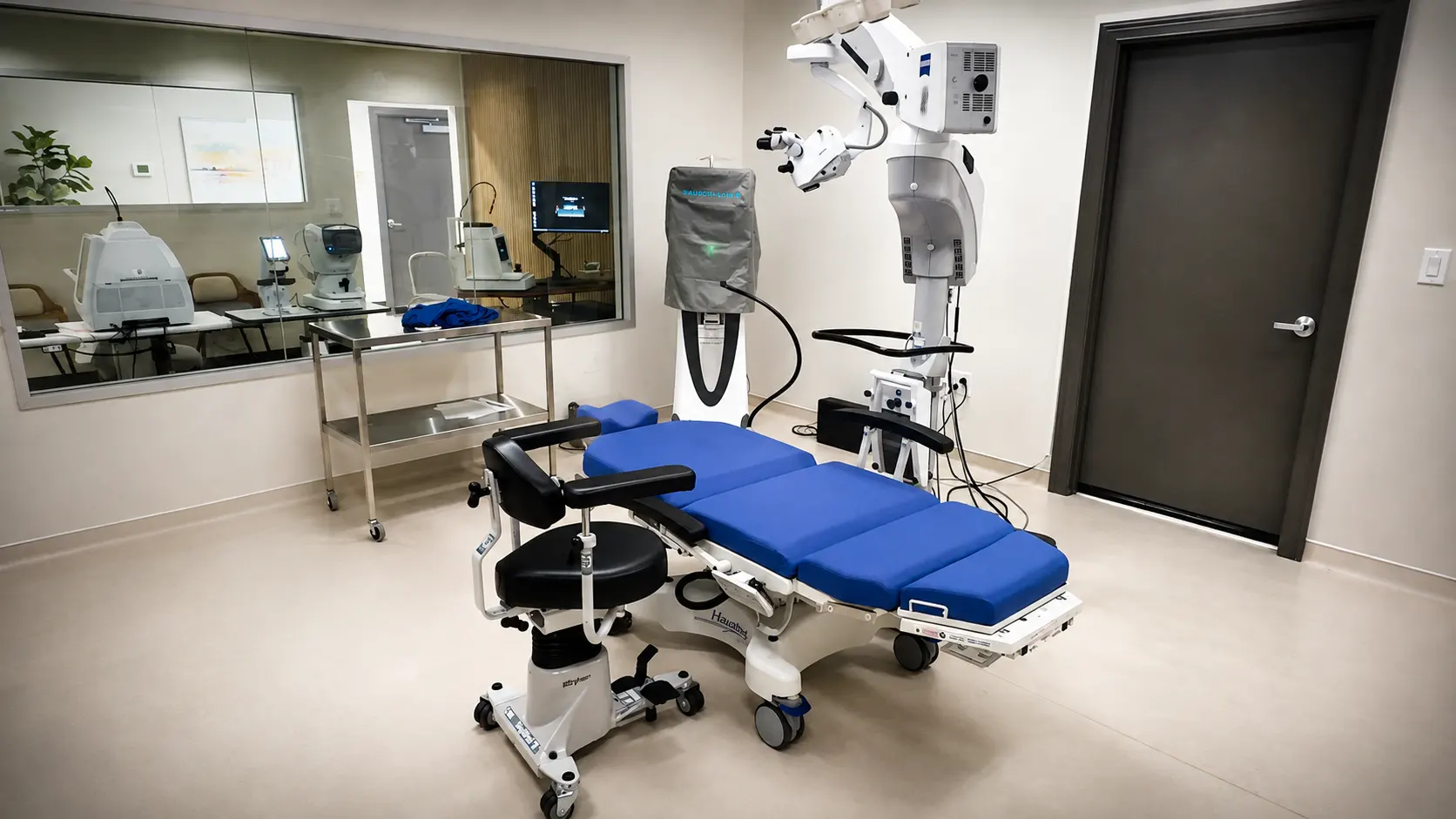
Dr. Truong performs cataract surgery in Azure's own office-based surgery suite, so there is no separate hospital or facility fee.
Our office-based surgery suite is accredited by The Joint Commission. In a hospital or surgery center, you usually owe coinsurance on a facility bill as well as the surgeon's bill. Without that facility bill, you may pay less.
Most patients also have no IV and no fasting.
Premium lenses
What drives the cost of a premium cataract lens?
The price of an upgrade comes from the lens design, the extra measurements it needs and any added steps such as astigmatism correction or light adjustment.
- ✓Lens design. EDOF, trifocal and full-range lenses cost more than a standard monofocal lens.
- ✓Astigmatism correction. A toric lens or laser-assisted correction adds planning and measurements.
- ✓Light adjustment. The Light Adjustable Lens in Fort Worth includes treatments after surgery to fine-tune your vision.
- ✓Laser assistance. LensAR laser cataract surgery is billed as an upgrade only when paired with a premium or astigmatism plan.
- ✓One eye or two. Upgrades are priced per eye.
Texas averages
What is the average cost of cataract surgery in Texas?
No single average predicts your bill, because online figures mix cash prices, insured prices and premium upgrades.
If you are insured, what matters is your share: deductible, coinsurance or copay, plus any upgrade. Medicare's Procedure Price Lookup tool shows national average Medicare amounts for surgery centers and hospital outpatient departments.
Paying for your share
How can you pay for cataract surgery?
You can combine insurance, HSA or FSA funds and financing to cover your share.
Financing
Monthly payment plans
Azure offers financing through CareCredit, ALPHAEON Credit and Cherry. Promotional plans may be available for qualified applicants.
See financing optionsHSA & FSA
Pre-tax health dollars
Eye surgery to treat a vision problem is generally an eligible medical expense under IRS Publication 502. You can often use HSA or FSA funds for your deductible, coinsurance or upgrade. Confirm with your plan administrator.
Your estimate
How do you get your exact cataract surgery estimate?
You get a written estimate after your exam and benefits check, before you schedule surgery.
Book an exam
Call (817) 886-4600 or request a visit at either office.
Get measured
We measure your eyes and confirm whether surgery is medically necessary.
Choose a lens
Dr. Truong explains which lenses fit your eyes and goals.
Review it in writing
We verify your benefits and give you a written estimate before you schedule.
FAQ
Cataract surgery cost and Medicare questions
Does Medicare pay for 100% of cataract surgery?
No. Original Medicare Part B usually pays 80% of the Medicare-approved amount after you meet the yearly Part B deductible, which is $283 in 2026. You pay the remaining 20% coinsurance unless a Medigap or other secondary plan covers it. Premium lens upgrades are not covered. At Azure Eye Center in Fort Worth, we review your coverage and give you a written estimate before scheduling.
What disqualifies you from cataract surgery?
Few things rule it out completely. Surgery may be delayed for an active eye infection or inflammation, poorly controlled diabetes or blood pressure, or a cataract that is not yet affecting daily life. Other conditions, such as macular disease or advanced glaucoma, can limit the benefit or rule out certain premium lenses. Dr. Truong's exam at Azure Eye Center determines whether surgery and which lens make sense for you.
Is a premium cataract lens worth the extra cost?
It depends on your goals and your eyes. If you are comfortable wearing glasses for reading, a standard monofocal lens covered by Medicare may suit you well. If you want less dependence on glasses, a toric, EDOF, trifocal or Light Adjustable Lens may be worth it. Dr. Truong explains the trade-offs, including possible halos or glare with some designs, before you decide.
Does Medicare cover the Light Adjustable Lens?
Medicare covers the medically necessary cataract surgery and the amount it would pay for a standard lens. The adjustable features of the Light Adjustable Lens, including the light treatments that fine-tune your prescription after surgery, are typically an upgrade you pay for. Azure Eye Center lists the covered portion and the upgrade cost in your written estimate so you can compare it with other lenses.
Do I pay for cataract surgery per eye?
Yes. Each eye is a separate surgery, usually done on different days, and each has its own charges. With Original Medicare, the Part B deductible applies once per calendar year, so if both eyes are done in the same year you usually meet it with the first surgery. Any premium lens upgrade at Azure Eye Center is also priced per eye.
Will I need glasses after cataract surgery, and are they covered?
Many people still use glasses for some tasks, especially with a standard monofocal lens, which usually means readers for close work. Medicare Part B covers one pair of eyeglasses with standard frames, or one set of contact lenses, after each cataract surgery with a lens implant. You pay 20% after the deductible plus any upgraded frame cost, and the supplier must participate in Medicare.
Does Medicare Advantage cover cataract surgery?
Medicare Advantage plans must cover medically necessary cataract surgery, but your costs and rules can differ from Original Medicare. Many plans use copays instead of 20% coinsurance, require prior authorization or a referral, or limit you to in-network surgeons. Azure Eye Center verifies your specific plan's benefits and gives you a written estimate before scheduling.
Can I use my HSA or FSA for cataract surgery?
In most cases, yes. Eye surgery to treat a vision problem is generally an eligible medical expense under IRS rules, so you can often use HSA or FSA funds toward your deductible, coinsurance or a premium lens upgrade. Check with your plan administrator to confirm. Our Fort Worth team can give you an itemized estimate and receipts for your records.
Related pages
Get your cataract surgery estimate in writing
Book an exam at our Fort Worth (Alliance) or Colleyville office. We check your benefits and put your costs in writing before you schedule.
General information only, not medical, insurance or tax advice. Medicare rules and amounts change; check medicare.gov or your plan for current details.