

Home / Cataracts / Cataract Surgery / LensAR Laser
Laser-assisted cataract surgery · Fort Worth & Colleyville
LensAR Laser Cataract Surgery in Fort Worth & Colleyville, TX
Dr. David Truong uses the LensAR® femtosecond laser and 3D imaging to plan and perform key steps of cataract surgery with computer-guided precision, for patients across Fort Worth, Colleyville, Keller, and the DFW Metroplex.

The short answer
What is LensAR laser cataract surgery?
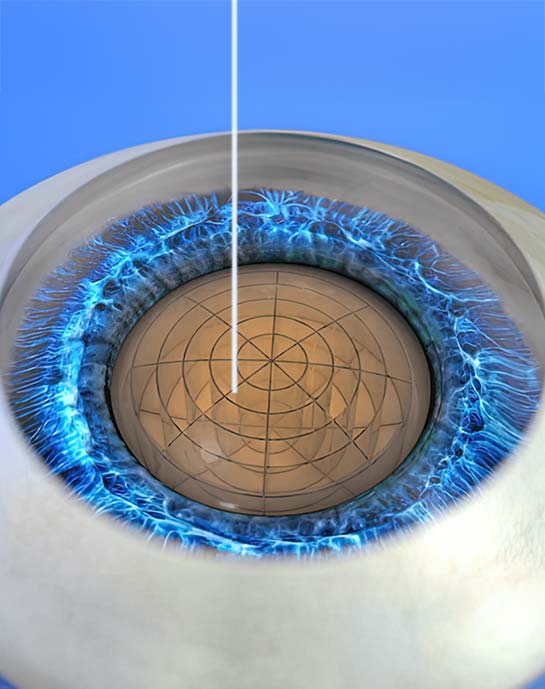
LensAR laser cataract surgery is cataract surgery in which a femtosecond laser, guided by 3D images of your eye, performs steps traditionally done by hand: opening the lens capsule, softening the cataract, and, when needed, making small incisions that reduce astigmatism. Dr. Truong then removes the cataract and places your new lens implant.
It is an optional upgrade to standard cataract surgery and is most often paired with premium lens implants and toric lenses for astigmatism. Patients come to Azure Eye Center for it from Fort Worth, Colleyville, Keller, Southlake, and across DFW.
Step by step
How does the LensAR laser work?
The laser handles the most precision-dependent steps of the procedure before Dr. Truong completes your surgery.
3D imaging
LensAR scans your eye in 3D, measuring the cornea, lens, and capsule so the treatment is planned around your exact anatomy.
Laser capsulotomy
The laser creates a precisely sized, well-centered opening in the lens capsule, which helps your new lens sit where it was planned.
Lens softening
The cataract is divided and softened in a pattern matched to its density, so less ultrasound energy is needed to remove it.
Astigmatism treatment
When appropriate, the laser places small arcuate incisions on the cornea to reduce mild astigmatism or marks the axis for a toric lens.
Dr. Truong then gently removes the softened cataract and implants the lens you chose at your consultation.
Precision
What are the benefits of laser cataract surgery?
The LensAR laser adds computer-guided precision to the parts of cataract surgery where small differences can affect how sharp your vision is afterward, especially with premium lenses.
- ✓Reproducible incisions. Laser-created openings are consistent in size, shape, and position.
- ✓Gentler cataract removal. Pre-softening the cataract reduces the ultrasound energy used inside the eye.
- ✓Support for premium lenses. Accurate centering helps multifocal, EDOF, and toric lenses perform as designed.
- ✓Astigmatism correction. Laser incisions can reduce mild astigmatism during the same surgery.
- ✓A plan for your eye. 3D imaging customizes treatment to your eye’s anatomy rather than an average eye.
Compare
Laser-assisted vs. traditional cataract surgery
Both approaches are safe and effective. The difference is how certain steps are performed.
| Step | Traditional cataract surgery | LensAR laser-assisted surgery |
|---|---|---|
| Planning | Measurements and surgeon markings | 3D imaging of your cornea, lens, and capsule |
| Capsule opening | Created by hand | Created by laser with precise size and centering |
| Breaking up the cataract | Ultrasound energy | Laser pre-softening, then less ultrasound |
| Astigmatism | Toric lens or manual incisions | Laser arcuate incisions and toric alignment marks |
| Cost | Covered by Medicare and most insurance | Laser step is typically an out-of-pocket upgrade |
Candidates
Who is a good candidate for LensAR?
Most adults who need cataract surgery can have the laser-assisted approach. Dr. Truong may recommend it if you:
- ✓Are choosing a premium lens such as a trifocal, EDOF, or light adjustable lens
- ✓Have astigmatism you want corrected during cataract surgery
- ✓Have a dense cataract that would otherwise need more ultrasound energy
- ✓Want to reduce your dependence on glasses after surgery
- ✓Want the most precise, predictable plan available for your eye
Some eye conditions, such as a pupil that does not dilate well or certain corneal scars, can affect whether the laser is the right choice. Your exam in Fort Worth or Colleyville answers that question.

Lens implants
Premium lenses that pair well with LensAR
Laser precision is most valuable when your lens implant is designed to do more than a standard monofocal.
Alcon PanOptix® Pro
Near, intermediate, and distance vision for the most freedom from glasses.
PanOptix Pro →enVista Envy™
A full range of vision with a design that resists glare and halos.
enVista Envy →TECNIS PureSee™
Distance and intermediate vision with monofocal-quality contrast.
TECNIS PureSee →Light Adjustable Lens
A lens that can be fine-tuned with light after surgery.
Light Adjustable Lens →Surgery day
What to expect with laser cataract surgery
Laser-assisted cataract surgery is an outpatient procedure, performed one eye at a time. Your eye is numbed with drops, and the laser portion typically takes just a few minutes. You may notice pressure and bright lights, but most patients do not feel pain.
Recovery
Most patients notice clearer vision within a day or two and return to normal routines within a few days. You will use prescribed eye drops, avoid rubbing your eye, and see Dr. Truong or Dr. Samantha Reynolds for follow-up visits while your vision settles over the next several weeks.

Cost & coverage
Is LensAR covered by Medicare or insurance?
Medicare and most insurance plans cover medically necessary cataract surgery, but the laser step is generally considered an elective upgrade. It is often included in premium lens or astigmatism-correction packages. Our team reviews your coverage and out-of-pocket cost with you before surgery, and financing is available.
See financing optionsFor a full breakdown, see cataract surgery cost and Medicare coverage in Fort Worth.
Why Azure Eye Center
Laser cataract surgery with a cornea specialist
Dr. David Truong is a board-certified ophthalmologist and fellowship-trained cornea and refractive surgeon. He combines LensAR laser precision with a full range of premium lens options, so your plan is built around how you want to see, not a one-size-fits-all approach.
- ✓Surgeon-led care from your first measurements through your final follow-up.
- ✓Advanced technology including LensAR, premium IOLs, and the Light Adjustable Lens.
- ✓Accredited surgery suite with Joint Commission accreditation for office-based surgery.
- ✓Two convenient offices in Fort Worth (Alliance) and Colleyville.

Two locations
Laser cataract surgery near you in Fort Worth and Colleyville
Consultations and follow-up visits are available at both offices, with Dr. Truong and optometrist Dr. Samantha Reynolds. Both offices are open Monday–Thursday 8:00 am–5:00 pm and Friday 8:00 am–3:00 pm.
(817) 886-4600
(817) 886-4600
Coming from Keller or Southlake? See eye surgery for Keller and Southlake patients.
FAQ
LensAR laser cataract surgery FAQs
Is laser cataract surgery better than traditional cataract surgery?
Both are safe and effective. The LensAR laser adds computer-guided precision to the capsule opening, cataract softening, and astigmatism incisions, which can be especially helpful when you choose a premium or toric lens. Dr. Truong recommends it when it adds real value for your eye.
Does Medicare cover LensAR laser cataract surgery?
Medicare covers medically necessary cataract surgery, but the laser step is usually an elective, out-of-pocket upgrade. It is often bundled with premium lens or astigmatism-correction packages. Our team reviews your exact cost before surgery.
Does laser cataract surgery hurt?
No, most patients feel pressure rather than pain. Your eye is numbed with drops, and the laser portion takes only a few minutes before Dr. Truong completes the surgery.
Can the LensAR laser correct astigmatism?
Yes, for many patients. The laser can create small arcuate incisions that reduce mild astigmatism and can mark the axis used to align a toric lens for larger amounts of astigmatism.
How long is recovery after laser cataract surgery?
Most patients see more clearly within a day or two and resume normal routines within a few days. Vision continues to settle over several weeks, with follow-up visits and eye drops along the way.
Where can I get laser cataract surgery near Fort Worth or Colleyville?
At Azure Eye Center, with offices in Fort Worth (Alliance) at 3900 N Tarrant Pkwy and in Colleyville at 5203 Heritage Avenue. Patients also come from Keller, Southlake, Grapevine, and North Richland Hills. Call (817) 886-4600 to schedule.
Related pages
Ask Dr. Truong if LensAR is right for you
Schedule a cataract consultation in Fort Worth or Colleyville to review your measurements, lens options, and whether laser-assisted surgery fits your goals.
This page is for general education and is not medical advice. Candidacy, treatment options, risks, and results vary by patient and are determined at an in-person exam with your eye doctor.