

Home / Cataracts / IOL Options / Light Adjustable Lens
Cataract surgery · Adjustable lens implant
Light Adjustable Lens (LAL) in Fort Worth & Colleyville, TX
The Light Adjustable Lens is the only lens implant that can be fine-tuned after cataract surgery. Dr. David Truong adjusts it with in-office light treatments so your final prescription is set based on how you actually see, for patients across Fort Worth, Colleyville, Keller, and the DFW area.
The short answer
What is the Light Adjustable Lens?
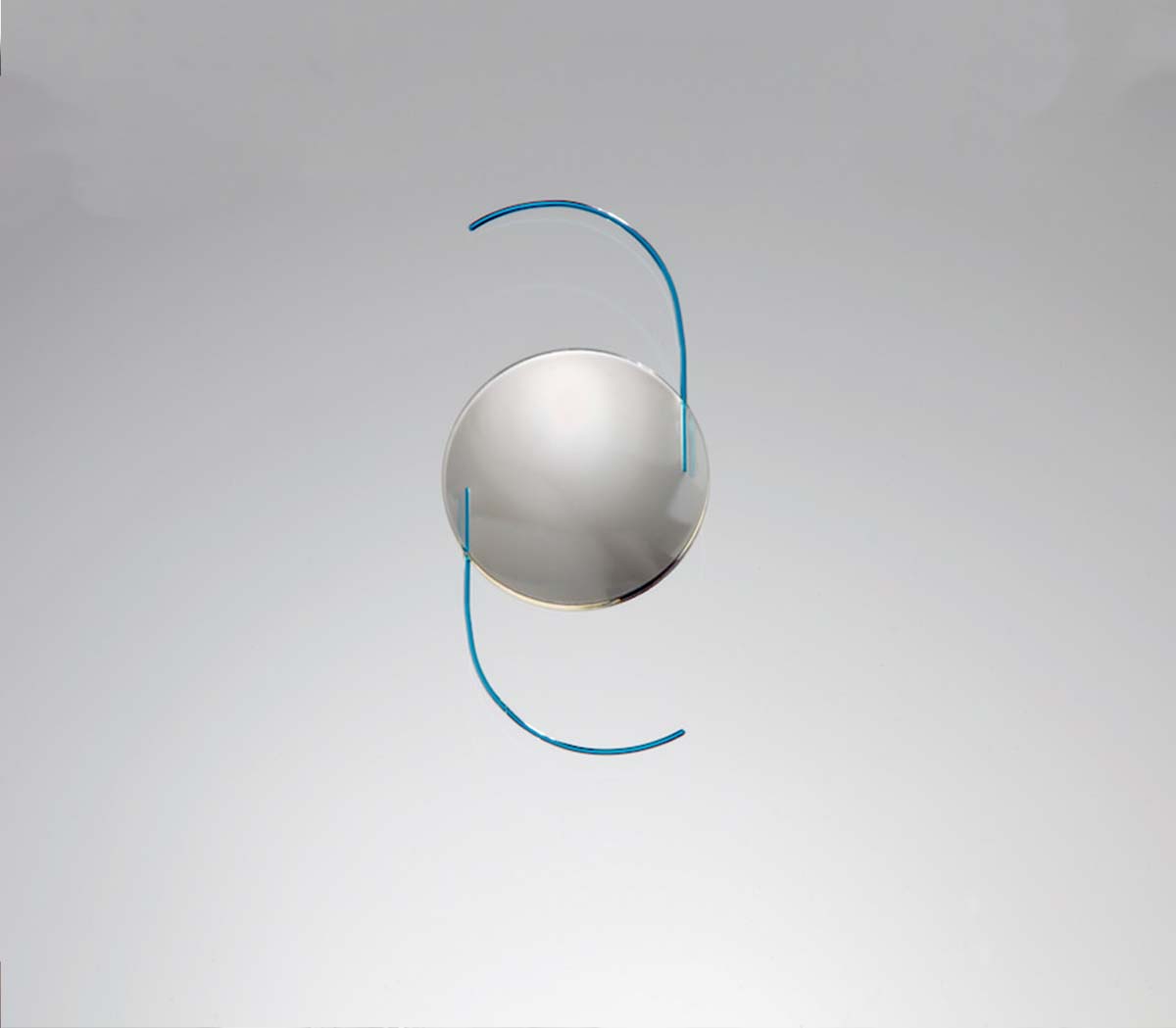
The Light Adjustable Lens (LAL) is an intraocular lens used in cataract surgery whose power can be changed after it is implanted. A few weeks after surgery, Dr. Truong uses a special UV light in the office to reshape the lens and correct remaining nearsightedness, farsightedness, or astigmatism, then locks in the result.
Standard lenses are chosen from measurements taken before surgery. The LAL lets you and Dr. Truong test your vision in daily life first and adjust it, which is why it appeals to patients who want precise results, including those who have had LASIK or PRK in the past.
Step by step
How does the Light Adjustable Lens process work?
Your treatment happens in two parts: cataract surgery, then a short series of light treatments to fine-tune and lock in your vision.
Cataract surgery
Dr. Truong removes your cataract and implants the Light Adjustable Lens in a routine outpatient procedure.
Healing period
Your eye heals for a few weeks. You wear UV-protective glasses during waking hours, indoors and outside, to protect the lens.
Light adjustments
At short office visits, a UV light device reshapes the lens to sharpen your vision. Most patients need only a few treatments.
Lock-in
Once you are happy with your vision, one or two final treatments lock the lens so the prescription stays stable.
The technology
How does light change the lens?
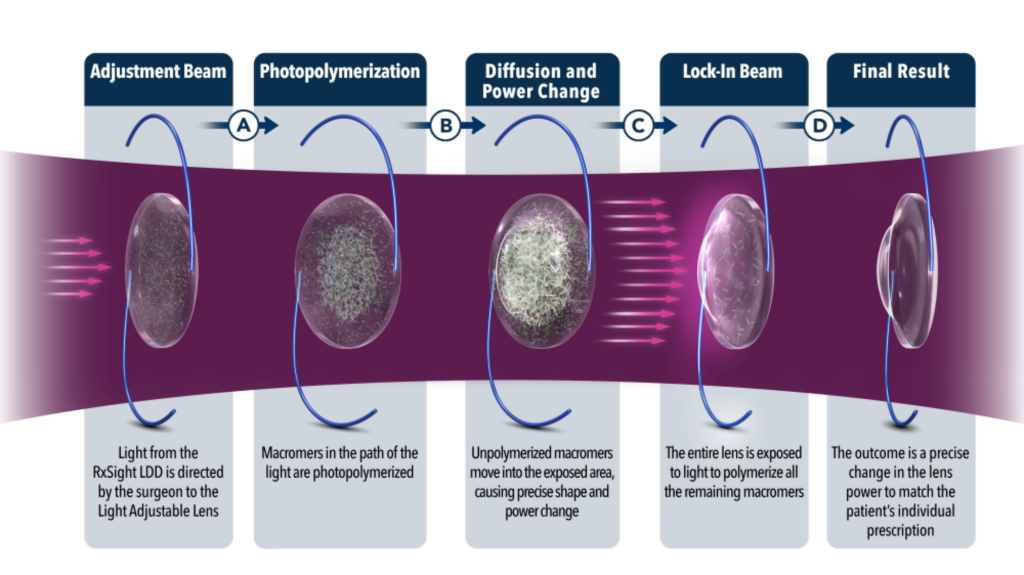
The LAL is made of a special light-sensitive material. When Dr. Truong directs a precise pattern of UV light onto the lens, the material in that area responds and the lens changes shape, which changes its power.
The pattern of light determines the correction: one pattern treats nearsightedness, another farsightedness, and another astigmatism. After your vision is where you want it, a lock-in treatment uses up the remaining light-sensitive material so the lens no longer changes.
- ✓No additional surgery. Each adjustment is a quick, painless in-office treatment.
- ✓Your input matters. You try your new vision at home, at work, and behind the wheel before it is finalized.
- ✓Stable once locked in. After lock-in, the lens behaves like any other permanent lens implant.
Candidates
Who is a good candidate for the Light Adjustable Lens?
The LAL is a strong choice for cataract patients in Fort Worth and Colleyville who want the most precise distance result possible. It may be a good fit if you:
- ✓Need cataract surgery and want to fine-tune your vision before it is final
- ✓Have had LASIK, PRK, or RK, which can make lens power calculations less predictable
- ✓Have astigmatism you want corrected without relying on glasses
- ✓Want a customized plan, such as sharp distance vision or a blended setup for distance and near
- ✓Can commit to wearing UV-protective glasses and attending several short follow-up visits
The LAL is not right for everyone. Your pupil must dilate well for the light treatments, and certain retinal conditions or medications that make you sensitive to light can rule it out. Dr. Truong reviews these at your exam.

Benefits
Why patients choose the Light Adjustable Lens
The main advantage is simple: your final prescription is chosen after surgery, not only predicted before it.
Adjusted after surgery
Your vision is refined once your eye has healed, based on how you see in real life.
Precise distance vision
Fine-tuning helps reduce leftover prescription that can occur with any lens calculation.
Astigmatism correction
Astigmatism can be treated during the light adjustments, not only during surgery.
Helpful after LASIK
Patients with prior laser vision correction gain a way to correct an unexpected result.
Clear, sharp optics
As a monofocal-style lens, the LAL avoids the rings that can cause halos with some multifocal lenses.
Painless adjustments
Each light treatment takes only minutes in the office, with no incisions or needles.
Compare
Light Adjustable Lens vs. other lens options
Every lens has strengths. Here is how the LAL compares with the other options Dr. Truong offers.
| Lens option | Vision range | Adjustable after surgery | Night glare | Astigmatism |
|---|---|---|---|---|
| Standard monofocal | One focal distance | No | Minimal | Toric version |
| Light Adjustable Lens | Distance, or a blended setup | Yes, with in-office light treatments | Minimal | Corrected during adjustments |
| EDOF (PureSee, Vivity) | Distance and intermediate | No | Low | Toric version |
| Trifocal (PanOptix Pro, enVista Envy) | Near, intermediate, and distance | No | Some halos possible | Toric version |
Not sure which lens fits? See all cataract lens options.
After surgery
What to expect with the Light Adjustable Lens
Cataract surgery with the LAL feels the same as standard cataract surgery: it is quick, outpatient, and done with numbing drops. The difference comes afterward.
Wearing UV-protective glasses
From surgery until your final lock-in, you wear the UV-protective glasses we provide whenever you are awake, indoors and outdoors. Sunlight and some indoor lighting contain UV light that could change the lens before your prescription is final.
Adjustment visits
Adjustments typically begin a few weeks after surgery. Each visit involves dilating drops and a short light treatment. You will see Dr. Truong for these visits, and most patients finish the process within several weeks.

Cost & coverage
Is the Light Adjustable Lens covered by insurance?
Medicare and most insurance plans cover medically necessary cataract surgery with a standard lens. The Light Adjustable Lens and its adjustment visits are a premium upgrade with an out-of-pocket cost. Our team explains your coverage and total cost before you decide, and financing is available.
See financing optionsLearn more about cataract surgery cost and Medicare coverage in Fort Worth.
Two locations
Light Adjustable Lens near you in Fort Worth and Colleyville
Consultations and follow-up visits are available at both offices, with Dr. Truong and optometrist Dr. Samantha Reynolds. Both offices are open Monday–Thursday 8:00 am–5:00 pm and Friday 8:00 am–3:00 pm.
(817) 886-4600
(817) 886-4600
Coming from Keller or Southlake? See eye surgery for Keller and Southlake patients.
FAQ
Light Adjustable Lens FAQs
What makes the Light Adjustable Lens different from other lens implants?
It is the only lens implant whose power can be changed after cataract surgery. Other lenses are fixed once implanted, while the LAL can be fine-tuned with in-office UV light treatments and then locked in.
How many light treatments will I need?
Most patients need a few short treatments. Adjustments usually begin a few weeks after surgery, followed by one or two lock-in treatments, and each visit takes only minutes.
Why do I have to wear UV-protective glasses?
The glasses keep everyday UV light from changing the lens before your prescription is final. You wear them during waking hours, indoors and outdoors, until your last lock-in treatment.
Do the light adjustments hurt?
No. Your eye is dilated and numbed, and you look into the light device for a short treatment. There are no incisions, and most patients return to normal activities right away.
Is the Light Adjustable Lens a good option after LASIK?
Yes, it is often a strong option. Prior LASIK, PRK, or RK changes the cornea in ways that make lens calculations less predictable, and the LAL allows Dr. Truong to correct the result after surgery.
Does insurance cover the Light Adjustable Lens?
Insurance covers the cataract surgery itself, but the LAL is a premium upgrade with an added cost. Our team reviews your coverage and payment options, including financing, before surgery.
Where can I get the Light Adjustable Lens near Fort Worth?
Azure Eye Center offers the LAL at our offices in Fort Worth (Alliance) and Colleyville. Patients also come from Keller, Southlake, Grapevine, and North Richland Hills. Call (817) 886-4600 to schedule a consultation.
Related pages
See if the Light Adjustable Lens is right for you
Schedule a cataract consultation in Fort Worth or Colleyville. Dr. Truong will review your measurements, eye health, and vision goals to help you choose the right lens.
This page is for general education and is not medical advice. Candidacy, treatment options, risks, and results vary by patient and are determined at an in-person exam with your eye doctor.