

Home / Cornea Services
Cornea disease & corneal transplant
Cornea Specialist in Fort Worth & Colleyville, TX
Fellowship-trained cornea specialist Dr. David Truong diagnoses and treats corneal disease at Azure Eye Center, from keratoconus and Fuchs’ dystrophy to partial-thickness corneal transplants, for patients across Fort Worth, Colleyville, and the DFW Metroplex.

The short answer
What does a cornea specialist do?
A cornea specialist is an ophthalmologist with fellowship training in diseases and surgery of the cornea, the clear front surface of the eye. Dr. Truong treats keratoconus, Fuchs’ dystrophy, keratitis, pterygium, and corneal scarring with medical care, corneal cross-linking, and corneal transplant surgery when it is needed.
Patients and referring optometrists from Fort Worth, Colleyville, Keller, Southlake, and North Richland Hills rely on Azure Eye Center for cornea care close to home.
Conditions
Which corneal conditions does Dr. Truong treat?
The cornea has to stay clear and evenly curved for you to see well. These are the most common conditions that change its clarity or shape:
- ✓Keratoconus. Progressive thinning that pushes the cornea into a cone shape, blurring and distorting vision.
- ✓Fuchs’ dystrophy. Loss of the endothelial cells that pump fluid out of the cornea, causing swelling and haze.
- ✓Keratitis. Inflammation of the cornea, often from infection, injury, or contact lens overwear.
- ✓Pterygium. A fleshy growth that starts on the white of the eye and can grow onto the cornea.
- ✓Corneal scarring. Scars from injury, infection, or surgery that block or distort light.
New to these terms? Start with understanding the cornea and common conditions.

Treatments
Cornea treatments and procedures at Azure Eye Center
Most corneal conditions are treated without surgery at first. When surgery is needed, Dr. Truong replaces or repairs only the tissue that is damaged whenever possible.
Corneal cross-linking
Strengthens the collagen in a thinning cornea to help slow or stop keratoconus.
Corneal cross-linking →DMEK
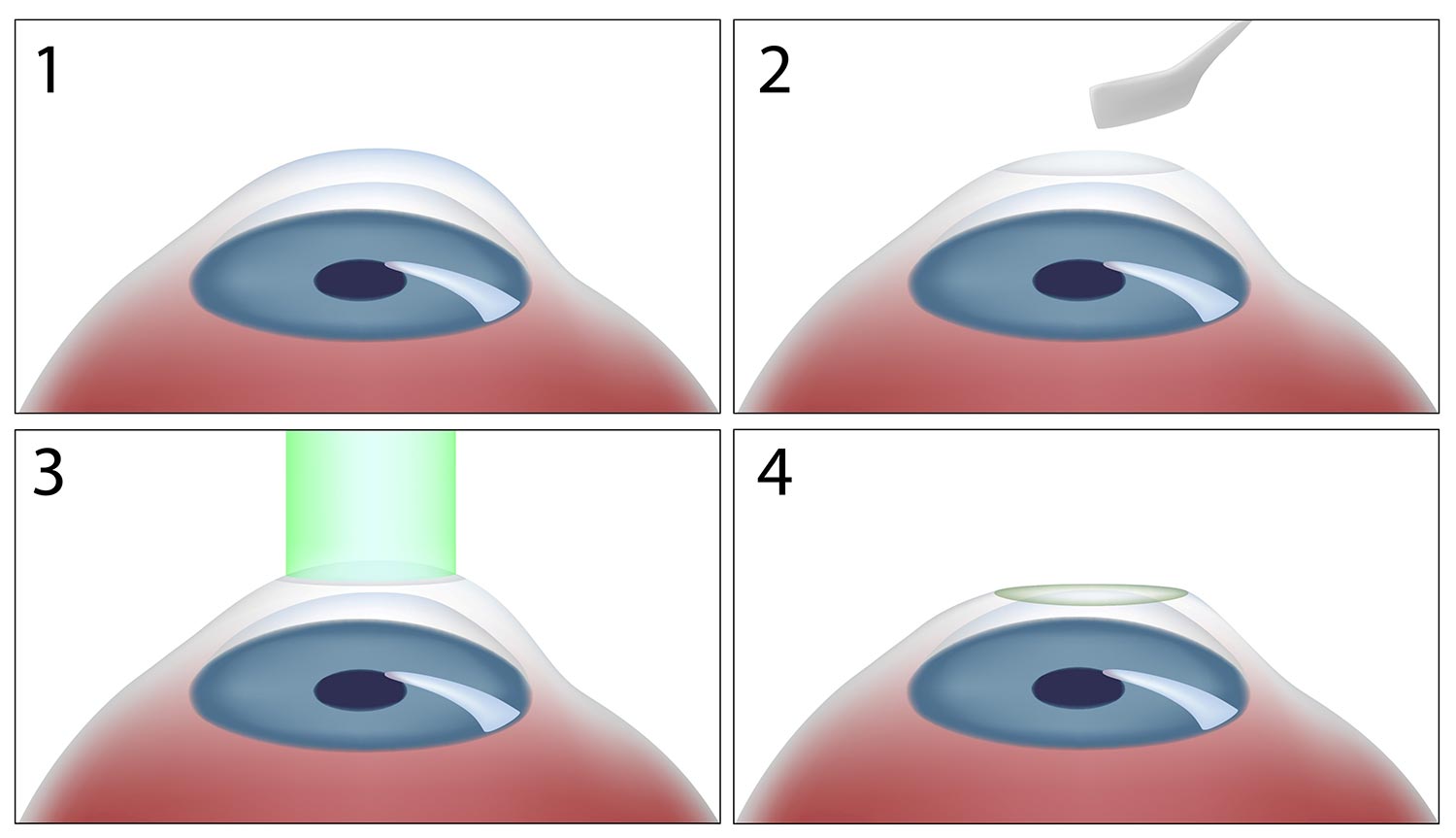
Replaces only Descemet’s membrane and the endothelium, the layers that fail in Fuchs’ dystrophy.
DMEK and DSEK →DSAEK
Replaces the inner layers of the cornea with a thin donor graft for corneal swelling.
DMEK and DSEK →Penetrating keratoplasty (PKP)
A full-thickness corneal transplant when both the front and inner layers are damaged.
Advanced corneal treatments →Superficial keratectomy
Removes or smooths the outer layer of the cornea to clear irregular or cloudy tissue.
Advanced corneal treatments →Pterygium removal
Removes a growing pterygium that causes irritation or reaches toward the center of the cornea.
Pterygium →Compare
Corneal transplant options compared
Dr. Truong matches the type of transplant to the layer of the cornea that is damaged.
| Procedure | What is replaced | Often used for | Recovery |
|---|---|---|---|
| DMEK | Descemet’s membrane and endothelium only | Fuchs’ dystrophy and corneal swelling | Often the fastest visual recovery of any transplant |
| DSAEK | The inner layers, with a thin layer of supporting tissue | Fuchs’ dystrophy and corneal swelling | Faster than a full-thickness transplant |
| Penetrating keratoplasty (PKP) | The full thickness of the central cornea | Damage to both front and inner layers, deep scars, advanced keratoconus | Longest; vision can take a year or more to settle |
| Superficial keratectomy | The outer epithelial layer is removed or smoothed | Surface irregularity or haze in the outer cornea | A bandage contact lens protects the eye while it heals |
Symptoms
When should you see a cornea specialist?
Corneal symptoms can be mild or severe depending on the cause. Schedule a visit if you notice:
- ✓Eye pain, discomfort, or a scratchy feeling
- ✓Sensitivity to light
- ✓Excess tearing, mucus, or crusting
- ✓Redness that does not clear up
- ✓Blurred, hazy, or worsening vision
- ✓Glasses or contacts that no longer correct your vision
The cornea is one of the fastest-healing tissues in the body, so a minor scratch may resolve in days. A more serious injury or infection can quickly get worse. If symptoms are sudden or you wear contact lenses, call (817) 886-4600 the same day.
Your visit
What to expect at your cornea appointment
A detailed exam
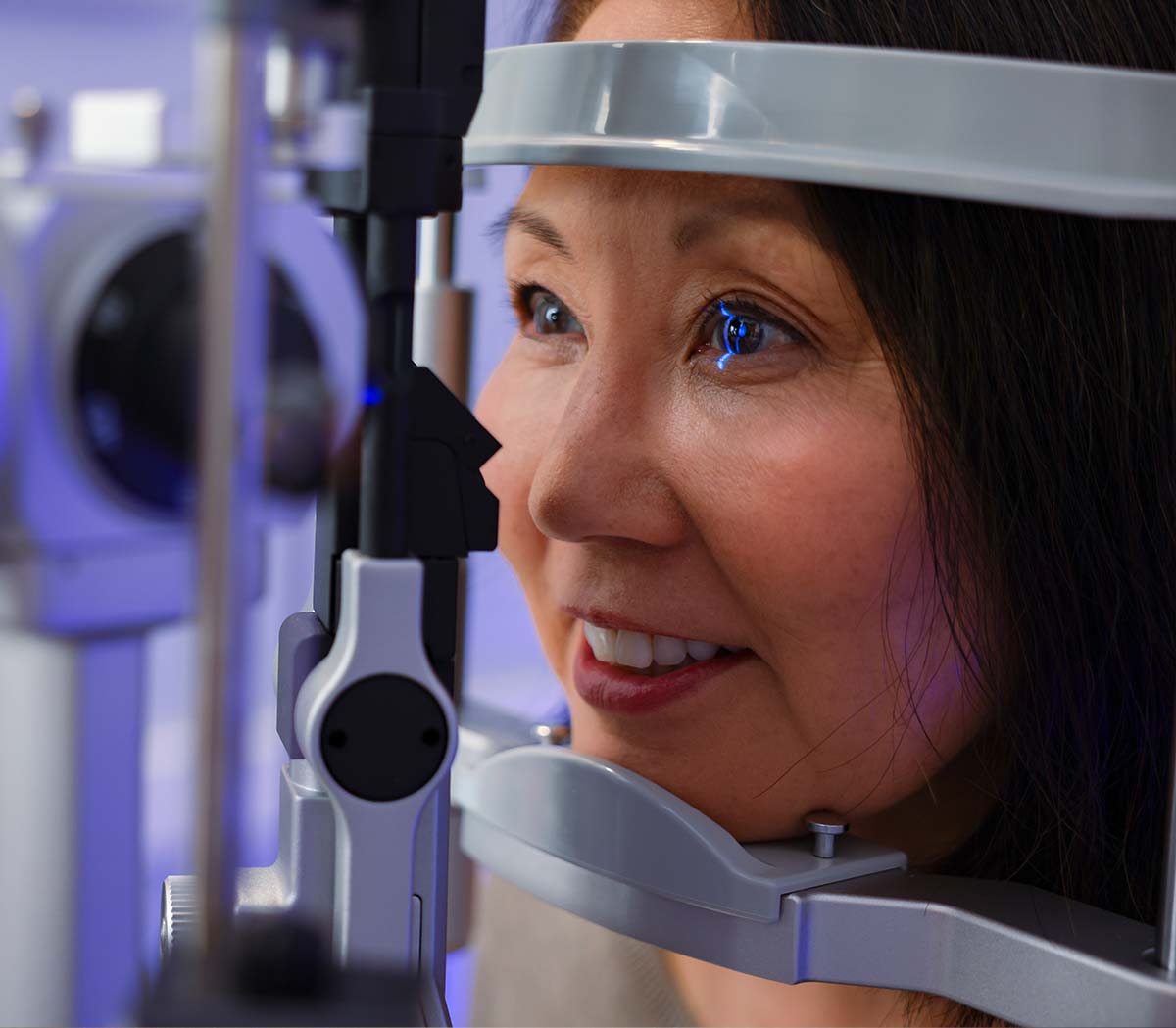
Dr. Truong examines each layer of your cornea under a slit-lamp microscope and measures its shape and thickness when needed.
A clear diagnosis
You will learn what is affecting your cornea, how it is likely to change, and what that means for your vision.
A treatment plan
Options may include drops or medicine, specialty contact lenses, cross-linking, or surgery, starting with the least invasive choice.
Coordinated follow-up
Follow-up visits are available in Fort Worth or Colleyville, and we keep your referring eye doctor updated.
Your surgeon
Why choose Dr. Truong for cornea care?
Dr. David Truong is a board-certified ophthalmologist and the founder of Azure Eye Center. After his ophthalmology residency at UT Southwestern Medical Center, he completed a fellowship in cornea and refractive surgery at UCLA’s Jules Stein Eye Institute. He is also an Adjunct Assistant Professor at UT Southwestern.
- ✓Full-spectrum cornea care, from medical treatment to PKP, DSAEK, and DMEK.
- ✓Keratoconus care, including corneal cross-linking.
- ✓Cataract and refractive expertise, helpful when corneal disease and cataracts occur together.
- ✓Two DFW offices, in Fort Worth (Alliance) and Colleyville.
For eye care providers
Referring a cornea patient?
Optometrists and eye care providers can send cornea referrals directly through our provider referral system. We coordinate care and keep you informed after every visit.
Send a referralTwo locations
Cornea specialist care in Fort Worth and Colleyville
Consultations and follow-up visits are available at both offices, with Dr. Truong and optometrist Dr. Samantha Reynolds. Both offices are open Monday–Thursday 8:00 am–5:00 pm and Friday 8:00 am–3:00 pm.
(817) 886-4600
(817) 886-4600
Coming from Keller or Southlake? See eye surgery for Keller and Southlake patients.
FAQ
Cornea specialist FAQs
What does a cornea specialist treat?
A cornea specialist treats diseases of the cornea, including keratoconus, Fuchs’ dystrophy, keratitis, pterygium, and corneal scarring. Care ranges from medicine and specialty lenses to cross-linking and corneal transplant surgery.
What is the difference between DMEK, DSAEK, and PKP?
They differ in how much of the cornea is replaced. DMEK replaces only the thin innermost layers, DSAEK replaces the inner layers with a little supporting tissue, and PKP replaces the full thickness of the central cornea.
How long does it take to recover from a corneal transplant?
It depends on the type. Partial-thickness transplants such as DMEK and DSAEK usually restore vision faster, while a full-thickness PKP can take a year or more for vision to fully settle.
Can keratoconus be treated without a transplant?
Yes, in most cases. Glasses or specialty contact lenses can improve vision, and corneal cross-linking can help slow or stop the cornea from thinning further. A transplant is reserved for advanced cases.
What causes a pterygium?
A pterygium is strongly linked to ultraviolet light exposure, along with wind, dust, and dry conditions. It is common in sunny climates like North Texas, and sunglasses help protect against it.
Where can I find a cornea specialist near me in Fort Worth or Keller?
Azure Eye Center has offices in Fort Worth (Alliance) at 3900 N Tarrant Pkwy and in Colleyville at 5203 Heritage Avenue, convenient to Keller, Southlake, Grapevine, and North Richland Hills. Call (817) 886-4600.
Related pages
See a cornea specialist in Fort Worth or Colleyville
Schedule an exam with Dr. Truong for a clear diagnosis and a treatment plan built around your cornea and your vision.
This page is for general education and is not medical advice. Candidacy, treatment options, risks, and results vary by patient and are determined at an in-person exam with your eye doctor.