

Home / Cornea / Corneal Cross-Linking
Keratoconus treatment · Corneal cross-linking (CXL)
Corneal Cross-Linking (CXL) in Fort Worth & Colleyville, TX
Corneal cross-linking strengthens a cornea weakened by keratoconus or post-LASIK ectasia so it stops getting thinner and steeper. Fellowship-trained cornea specialist Dr. David Truong offers FDA-approved CXL to patients from Fort Worth, Colleyville, Keller, and across DFW.
The short answer
What is corneal cross-linking?
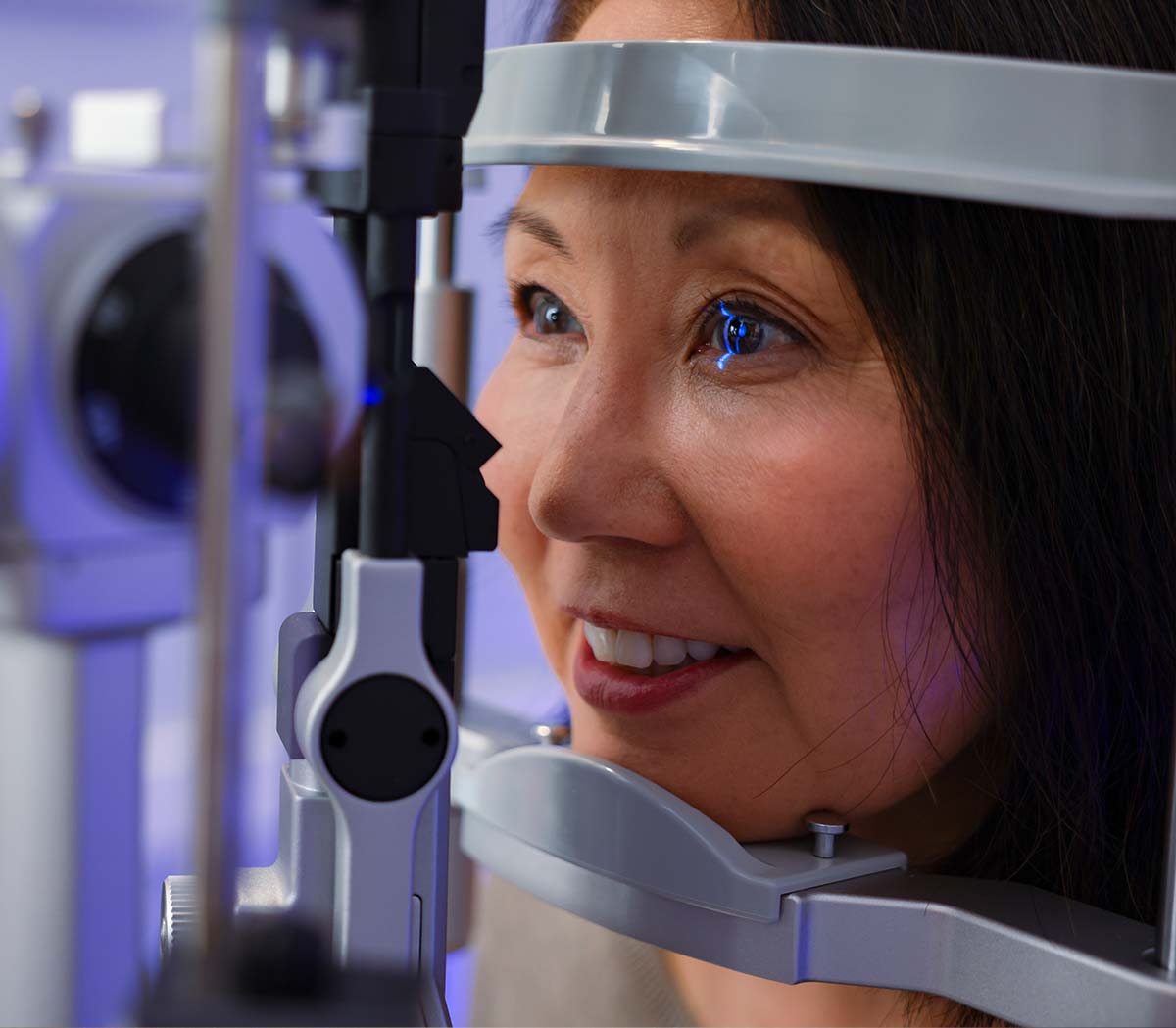
Corneal cross-linking (CXL) is an in-office treatment that strengthens a weakened cornea by combining riboflavin (vitamin B2) eye drops with ultraviolet-A light. It is the FDA-approved treatment designed to slow or stop the progression of keratoconus and corneal ectasia after LASIK, helping you keep the vision you have.
CXL does not reverse keratoconus or replace glasses or contacts. Its job is to keep the cornea from continuing to thin and bulge, which is why treating early, before vision is badly affected, matters.
How it works
How does corneal cross-linking work?
Your cornea gets its strength from layers of collagen fibers. In keratoconus, those fibers weaken, and the cornea gradually thins and bulges into a cone shape that blurs and distorts vision.
During CXL, riboflavin drops soak into the cornea and are then activated with a controlled dose of UV-A light. This creates new bonds, or cross-links, between the collagen fibers and stiffens the cornea.
- ✓It can slow or stop keratoconus and ectasia from progressing.
- ✓It may modestly improve corneal shape over time for some patients.
- ✓It can lower the chance you will ever need a corneal transplant.
- ✓It cannot undo distortion that has already happened or replace glasses and contacts.

Step by step
What happens during corneal cross-linking?
CXL is an outpatient procedure that usually takes about 60 to 90 minutes from start to finish.
Numbing drops
Anesthetic eye drops keep you comfortable throughout the treatment.
Surface preparation
The thin outer layer of the cornea, the epithelium, is gently removed so riboflavin can absorb.
Riboflavin drops
Vitamin B2 drops are applied for about 30 minutes to saturate the cornea.
UV-A light
The cornea is exposed to UV-A light for about 30 minutes to activate cross-linking.
A soft bandage contact lens is placed to protect the eye while the surface heals, and you go home the same day.
Candidates
Who is a candidate for cross-linking?
CXL is recommended for people with progressive keratoconus or corneal ectasia after LASIK, a rare complication that behaves like keratoconus. You may be a candidate if:
- ✓You are typically 14 years of age or older
- ✓Your keratoconus or ectasia is worsening on corneal imaging
- ✓Your cornea is thick enough to meet safety guidelines
- ✓You have not reached the stage where a corneal transplant is needed
Keratoconus often starts in the teens and twenties. If you or your child has been diagnosed, regular corneal mapping shows whether it is progressing and whether CXL should be done now.

Compare
How CXL fits with other keratoconus treatments
Most patients use more than one of these over time. CXL is the only one aimed at stopping the disease itself.
| Treatment | What it does | Stops progression? |
|---|---|---|
| Glasses or soft contacts | Correct vision in early keratoconus | No |
| Rigid or scleral contact lenses | Give sharper vision over an irregular cornea | No |
| Corneal cross-linking (CXL) | Strengthens the cornea to stabilize its shape | Yes, that is its goal |
| Corneal transplant | Replaces scarred or very thin cornea in advanced cases | Replaces the diseased tissue |
Learn more about keratoconus and advanced corneal treatments.
Recovery
What is recovery like after CXL?
The first few days are the most uncomfortable while the corneal surface heals under the bandage lens. Expect:
- ✓Light sensitivity for several days.
- ✓Mild discomfort or a gritty, foreign-body feeling.
- ✓Blurred vision for several days, with some fluctuation for weeks afterward.
You will use prescribed eye drops and come back for follow-up visits, including corneal mapping to confirm the cornea has stabilized. Avoid rubbing your eyes, which can worsen keratoconus. Once your cornea is stable, glasses or specialty contact lenses can be updated for your best vision.
Your specialist
Why choose Dr. Truong for cross-linking?
Dr. David Truong is a board-certified ophthalmologist with fellowship training in cornea and refractive surgery from UCLA’s Jules Stein Eye Institute. He diagnoses and treats keratoconus at every stage, from monitoring and CXL to transplant surgery when it is needed.
- ✓Cornea subspecialist who tailors CXL to your corneal thickness and rate of progression.
- ✓Advanced corneal imaging to track changes over time.
- ✓Long-term follow-up from diagnosis through stable vision.
- ✓Two offices in Fort Worth (Alliance) and Colleyville.

Two locations
Corneal cross-linking near you in Fort Worth and Colleyville
Consultations and follow-up visits are available at both offices, with Dr. Truong and optometrist Dr. Samantha Reynolds. Both offices are open Monday–Thursday 8:00 am–5:00 pm and Friday 8:00 am–3:00 pm.
(817) 886-4600
(817) 886-4600
Coming from Keller or Southlake? See eye surgery for Keller and Southlake patients.
FAQ
Corneal cross-linking FAQs
Does corneal cross-linking cure keratoconus?
No. Cross-linking is designed to slow or stop keratoconus from getting worse, not to reverse it. Some corneas flatten slightly over time after CXL, but most patients still need glasses or specialty contact lenses afterward.
Is corneal cross-linking FDA-approved?
Yes. Corneal cross-linking is FDA-approved for progressive keratoconus and for corneal ectasia after refractive surgery such as LASIK. Dr. Truong will confirm on imaging whether your cornea is progressing.
Does cross-linking hurt?
The procedure itself is not painful because your eye is numbed with drops. Afterward, most patients have discomfort, light sensitivity, and blurry vision for several days while the corneal surface heals.
How long does it take to recover from CXL?
Most discomfort settles within several days as the surface heals. Vision can fluctuate for weeks to months while the cornea stabilizes, and follow-up visits track that progress.
What age can you get corneal cross-linking?
CXL is typically performed in patients 14 and older whose keratoconus is progressing. Because keratoconus often worsens fastest in younger patients, early evaluation is important.
Is corneal cross-linking covered by insurance?
Many insurance plans cover FDA-approved cross-linking for progressive keratoconus, but coverage varies by plan. Our team verifies your benefits and explains any out-of-pocket cost before treatment.
Where can I get corneal cross-linking near Fort Worth or Keller?
At Azure Eye Center, with offices in Fort Worth (Alliance) at 3900 N Tarrant Pkwy and in Colleyville at 5203 Heritage Avenue. Patients also come from Keller, Southlake, Grapevine, and North Richland Hills. Call (817) 886-4600.
Related pages
Find out if cross-linking can protect your vision
Schedule a keratoconus evaluation in Fort Worth or Colleyville. Dr. Truong will map your cornea, check for progression, and explain whether CXL is right for you now.
This page is for general education and is not medical advice. Candidacy, treatment options, risks, and results vary by patient and are determined at an in-person exam with your eye doctor.